A wet spring on Long Island does not only fill creeks and delay beach plans. It changes conditions under houses that looked dry all winter. Crawl spaces that breathed in March can hold humidity by mid May. Mulch packed against siding stays damp past sunset. Rim joists that never fully dried become inviting for ants, silverfish, and other insects that were always nearby but now have a reason to move indoors.
Peconic Pest Control has worked the Hamptons and East End since 1997. This article explains how moisture, crawl spaces, and insects connect after a wet spring. It is not a promise that one visit removes every species on the same day.
Crawl spaces often tell the story first
Many South Fork homes mix slab sections, crawl pockets, and older rim joist details. After repeated rain, vapor can linger where ventilation or vapor barriers are weak. You might smell mustiness when the hatch opens, see insulation sag in one bay, or feel a clammy floor above a specific room.
Walk the perimeter on a dry afternoon after a wet week. Note where downspouts discharge, whether grading funnels water toward the foundation, and whether crawl vents are blocked by beach chairs or leaves.
Properties in Southampton, Water Mill, and Bridgehampton often stack irrigation, pool splash, and roof runoff into the same bed line by late spring. Our spring pest proofing guide treats foundations and mulch as one habit.
If you only react when ants reach the kitchen counter, you are seeing the end of a longer story that usually starts with moisture and entry gaps at the sill.
Ants on patios and foundations
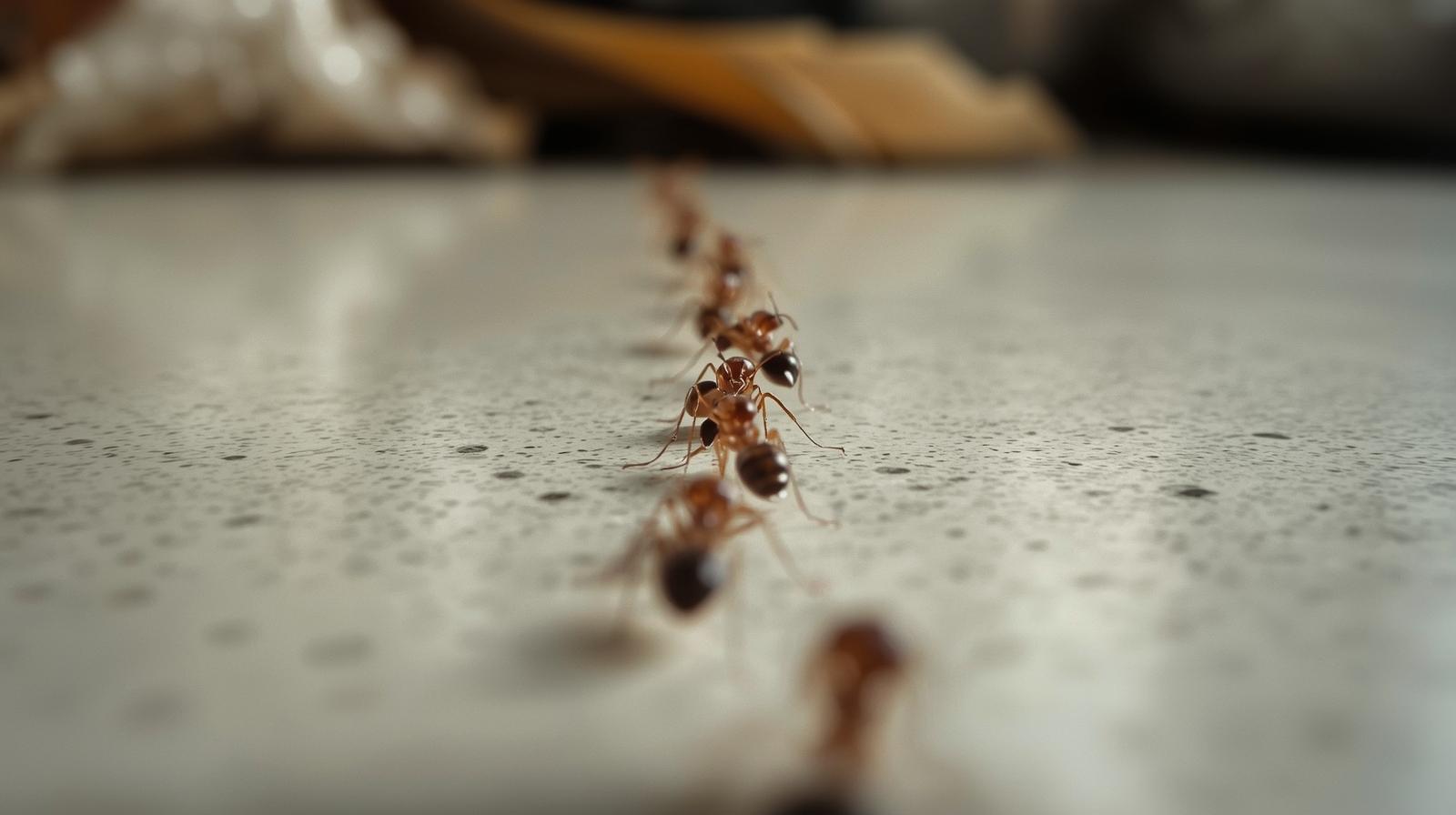
Warm afternoons wake foraging trails across bluestone before Memorial crowds arrive. Sugary spills, pet bowls on the deck, and the first outdoor fridge drip become reliable stops. After a wet spring, more workers test routes when soil stays damp.
Trails along the foundation after rain often mean exterior pressure, not a dirty pantry. Tell us which surface ants prefer and whether weatherstripping at sliders is torn.
See ant trails on counters and patios and late April pavement ant trails.
Carpenter ants and termites are different
Sawdust, winged insects near posts, or soft trim after a nor’easter may be carpenter ants, not patio ants. Mud tubes call for termite control. Photograph frass before vacuuming. Read termite clues when structure is in question.
Silverfish, earwigs, and basements
Silverfish favor humid voids and stored cardboard. Earwigs concentrate where mulch touches siding. Move clutter off concrete, pull mulch back, and run a dehumidifier where appropriate.
Mice overlap with moisture and storage habits. See mice in garage and shed.
Mosquitoes and ticks on the same calendar
Ants the same week mosquitoes gather at deck lights does not mean one spray fixes both. Mosquito control and tick control are separate plans tied to water, vegetation, and lawn use.
See April dusk mosquitoes and deck lighting and our May outdoor timeline.
Second homes reopening
Open crawl hatches safely, check vents, and run irrigation so it does not soak the lowest siding course every evening. Our opening a second home checklist pairs with this moisture story.
Before the technician arrives
Reseat weatherstripping where sliders leak. Move mulch away from siding. Trim branches that touch the roofline. Fix downspout extensions. Empty saucers after rain. These steps support general insect and rodent control; they do not replace treatment when colonies are established.
When to call
Send photos of trails or damp areas from a safe position. Note town, whether the home was closed all winter, and whether wings appeared after rain.
Request a quote or call 631-287-7378. We separate carpenter ant signals from smaller ants at the first outdoor dinner of the year and align service with the crawl space story your house is already telling after a wet spring.