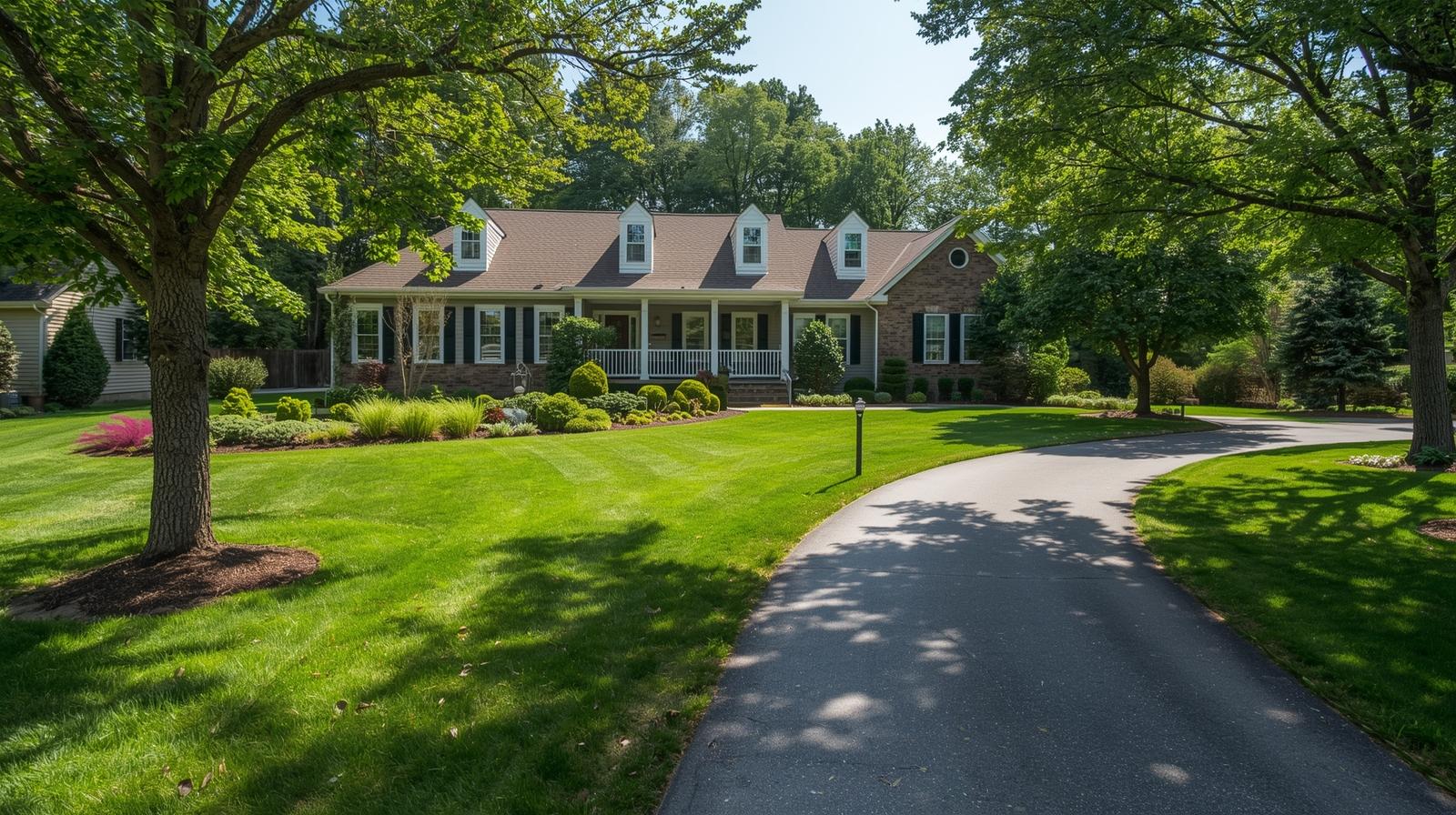
When a South Fork lawn gets overseeded, the pest calendar has to respect the hose. Sandy Hamptons turf needs frequent light water or the seed dies. Tick and mosquito work that wants a dry canopy, or a reentry window during guest arrival, cannot pretend that water is optional. If we fight the seedbed, you lose grass and still get a complaint about pests.
Peconic Pest Control has timed East End outdoor service around occupancy since 1997. Seed changes the occupancy of the lawn itself. Tell us the seed date before we lock a tick visit. We would rather move a day than brown out a stand you just paid to establish.
Sand does not store a mistake
A skipped afternoon on a Montauk west corner writes a tan rectangle. Ocean wind makes it faster. A vacant house cannot keep a seedbed. If the family is gone, name who can run irrigation. If nobody can, delay seed, do not delay honesty.
Deer and geese graze new grass. That is browse, not disease. A party tent on the seeded strip is traffic. Those belong in the same conversation as pest timing because they share the lawn.
What we will reschedule
Applications that need dry leaf, or that conflict with constant wetting, move. So does a visit that requires people off the turf during check-in. Write seed type, start times, and guest dates in one place. Tick habitat at the wood line can still be discussed as a separate zone if the seeded lawn is the constraint.
Use contact when renovation and pest service land in the same two weeks. Hamlet, seed date, and arrival date. The South Fork weekend is the reason the seed is there. The seed still needs water more than it needs a spray day.
What we need on one calendar
Seed date, who waters, guest arrival, and the tick visit you wanted that week. If those four fight, the seed loses. Sandy South Fork turf does not store a skipped afternoon. Deer and geese do not care that you paid for rye.
Montauk west corners dry faster than a sheltered Sag Harbor courtyard. Tell us which. We will move pest timing rather than brown out a stand you just established. That is coordination, not a delay for its own sake.
If the wood line still needs tick work, we can talk about that zone separately while the seeded lawn stays on a water-first plan. Do not merge them into one angry Saturday.
Write seed type, start times, and who can run irrigation at 6 a.m. If nobody can water a vacant house, delay seed. A Friday pest visit that needs a dry canopy should move. We would rather reschedule than brown out rye on South Fork sand because the weekend won.