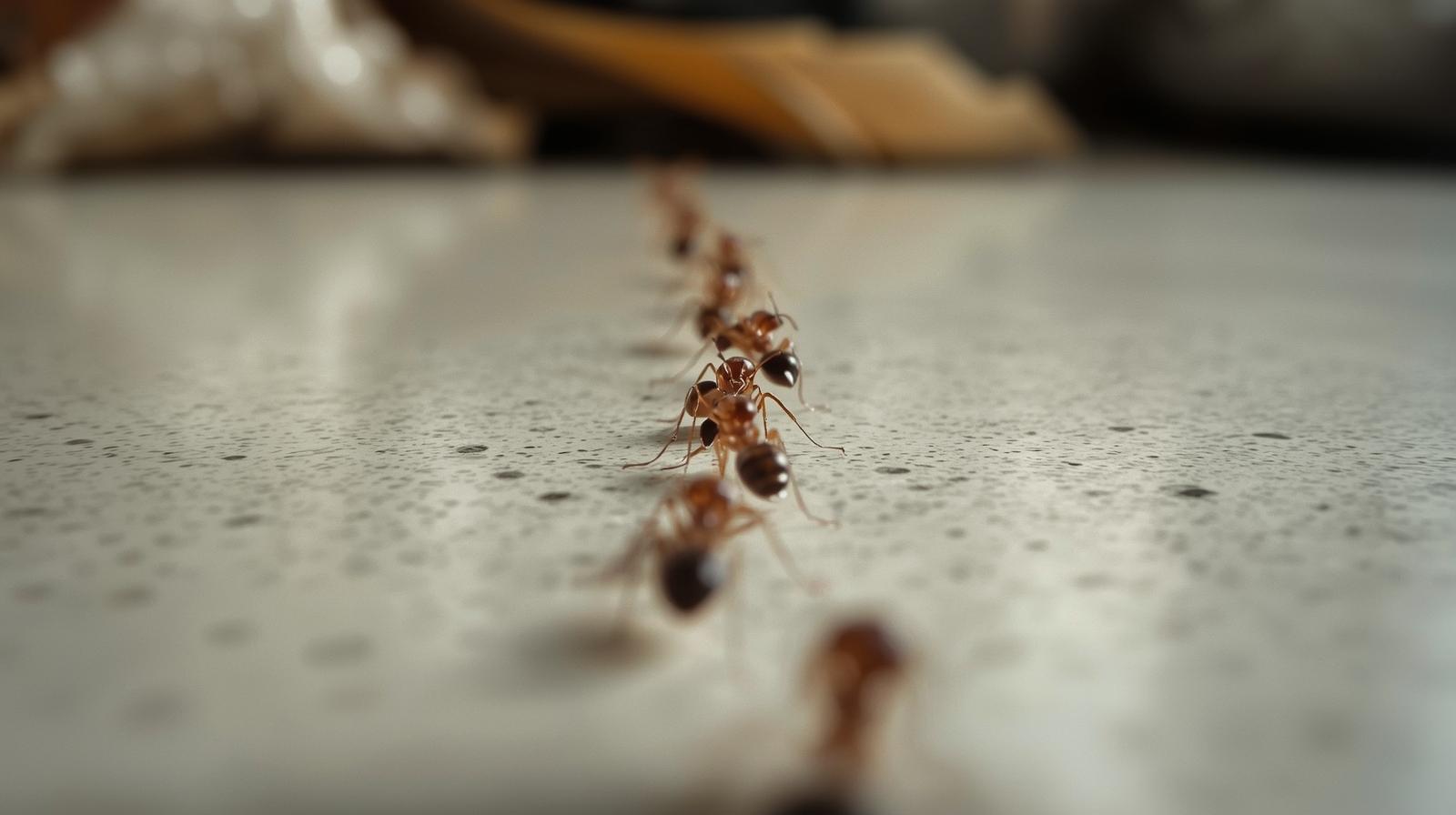
Homeowners often report “ants in the kitchen” and stop there. That phrase can mean small sugar ants at a backsplash or large carpenter ants moving from damp wood into the house. Those are different problems. Mixing them in one vague call delays the right inspection.
Peconic Pest Control has served East End communities since 1997 with general insect and rodent control. Clear evidence at the start shortens the visit and keeps indoor trails from being treated like a wood-nesting issue, or the reverse.
Size, location, and what they are doing
Small ants on a counter after fruit or pet food sat out usually point to a sanitation and trailing story indoors. Carpenter ants are larger, often noticed as scattered wings, rustling in walls, or workers moving along sills, especially where moisture has softened wood.
Write what you saw: approximate size, time of day, indoor versus outdoor trail, and if wings or frass showed up. A phone photo next to a coin helps more than the word “huge.”
Our earlier note on ants on kitchen and patio covers everyday trailing. This article focuses on why carpenter ant reports need a different evidence set.
Kitchen ants: fix the food story, then inspect trails
Wipe counters, rinse recycling, empty pet bowls overnight, and move ripe fruit. Check under dishwasher edges and along the backsplash where sticky film builds. Trails that vanish after sanitation still deserve inspection if they return on a schedule, but the first step is removing the buffet.
Outdoor grease and patio trash can feed the same pressure. See ants at outdoor meals when trash sits by the patio when the slider and the kitchen sink are part of one loop.
Carpenter ants: look for moisture and wood clues
Carpenter ants nest in soft or damp wood. They do not eat wood the way termites do, but they excavate it. Check stained sills, leaking ice makers, bathroom fan problems, shower leaks, deck ledger issues, and hollow-sounding porch posts. Note any sawdust-like frass below slits in wood.
April and damp shoulder seasons often reveal clues along sills. Browse carpenter ant clues on damp sills for what to photograph before the crew arrives.
If termites are also a concern because of swarmers or damaged wood, keep that report separate and ask about termite control. Winged ants and winged termites are easy to confuse in a rushed photo, so capture clear images before cleanup.
Do not treat the labels as interchangeable
A bait approach aimed at small kitchen ants does not automatically solve a carpenter ant nest in a damp fascia. A structural moisture repair does not erase a pantry trail by itself. Ask the technician which evidence controlled the recommendation and which item is a separate follow-up.
Integrated Pest Management still starts with identification. Guessing the species from across the room is how products get applied to the wrong story.
What to send with the service request
Send photos of the ants, wings if present, frass, the exact room or sill, moisture stains, and outdoor trails near the foundation. Mention recent leaks, renovations, or firewood stacked against the house.
A simple way to phrase the call
Try: “Small ants on the kitchen counter each morning near the dishwasher,” or “Large ants and wings on the sill by the porch with damp wood staining.” Those sentences beat “ants everywhere.” They tell the technician which tools and which inspection path to bring.
If both seem present, say both. Dual evidence is common on older East End homes. It still deserves two clear notes, not one blurred label.
Properties in Sag Harbor and across the South Fork can use contact to book an inspection. Say “small kitchen ants” or “possible carpenter ants with these photos” so the visit starts in the right place.
Seasonal clues that change the story
Warm humid weeks push more small ants indoors toward air conditioning and food. Spring moisture and soft wood reveal carpenter ant activity along sills and porch posts. Fall can bring ants indoors as outdoor food slows. Note the season beside your photos so the technician hears timing, not only the word ants.
Renovation and leak timing
Kitchen remodels, dishwasher replacements, and roof or ice-dam repairs often line up with new ant reports. Mention recent water events. Carpenter ants follow moisture. Small kitchen ants follow crumbs and sweet spills that appear when a house is lived in harder during guest season.
When wildlife or termites enter the same call
If you also see rodents, keep that as a separate line item. If you see mud tubes or damaged structural wood, ask about termite control rather than assuming every wood insect is a carpenter ant. Clear photos prevent three problems from being treated as one vague “bug issue.”